URL Title Tag Optimization
The title tag is the one of the simplest, yet quite possibly most important aspect of on-page SEO. Title rewrites are usually the first thing we ship on an SEO program, since they move CTR within days of getting recrawled. The format for writing a title tag in HTML is as follows:
The title of the website is not only an important factor because it is the title of that page, but it is usually what is displayed in the search results as well.
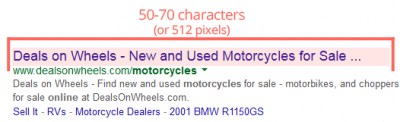
We recommend that title tags stay around 50-60 characters (roughly 600px on desktop), which is where Google tends to truncate them in the SERPs with an ellipsis. Mobile truncation can kick in even sooner, so the front of the title does the heavy lifting.
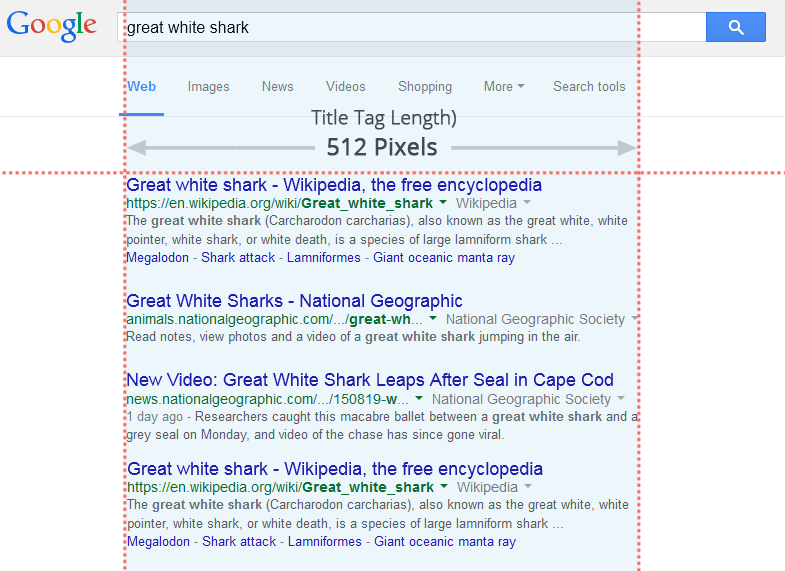
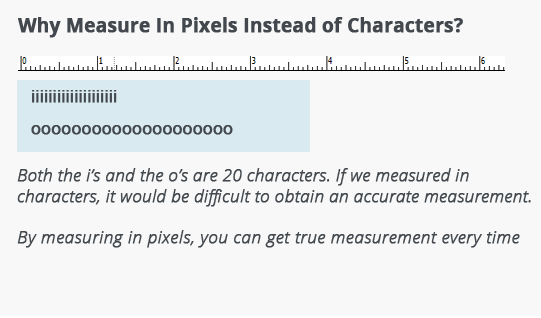
But why did SEOs start measuring title tags in pixels? Character width varies (a capital W is much wider than a lowercase i), so two titles of the same character count can truncate in very different places in the SERPs. Google changed the SERP layout in 2014 and most SEOs have been measuring in pixels ever since. Today’s safe budget is roughly 600px on desktop before truncation kicks in.
Another caveat of title tag optimization is that the title tag of a website is used by a lot of different devices, browsers, apps, and more. For instance most web browsers use the website title tag as the browser title as well. You can see in this example how even the New York Times homepage stretches beyond my browser tab.

While this isn’t really a direct ranking factor for SEO, it is something to keep in mind as an internet marketer. When a visitor has 20 tabs open and they are scanning to see which one is which, you want to be able to help them find the one they are looking for. This is yet another reason to write title tags geared towards users, not search engines.
A SEO Recommendations
It should go without saying that you should always try to create unique title tags for each page. Always avoid using the same title tag across multiple pages, even if you are tempted. And just because 600px is the rough budget, you don’t need to use it every time.
Also avoid using vague title tags such as “our homepage” or “untitled.” Remember, Google indexes pages quickly, so your title will show up in search results fast, but since August 2021 Google has also been rewriting titles in the SERPs a significant portion of the time (studies put it well over half of all queries). Even when your tag gets replaced, it still feeds into how Google picks the displayed title, so write it carefully.
Try to put the most important keywords or the keywords you are trying to rank for at the beginning of the title tag. Several official and unofficial studies have been done on title tags that have shown the closer to the beginning that the keyword is, the more important and relevant Google considers the keyword.
Bulk Title Tag Analysis
As your website matures, we recommend doing a full title tag analysis on your website. By doing a title tag analysis on your website for SEO, it accomplishes a few things:
- you get a good understanding of the structure of your website
- you find missing title tags
- you find incomplete or misspelled title tags
- you will find un-optimized or under-optimized title tags
Without a doubt our favorite tool for title tag analysis is Screaming Frog. Screaming Frog has a wealth of powerful features but one of our favorite features is being able to see the entire websites title tag structure at a quick glance.
Example of Title Tag Optimization
Let’s take a look at an example page. In this scenario, you are an SEO working for Best Buy and your job is to write title tags for this site:
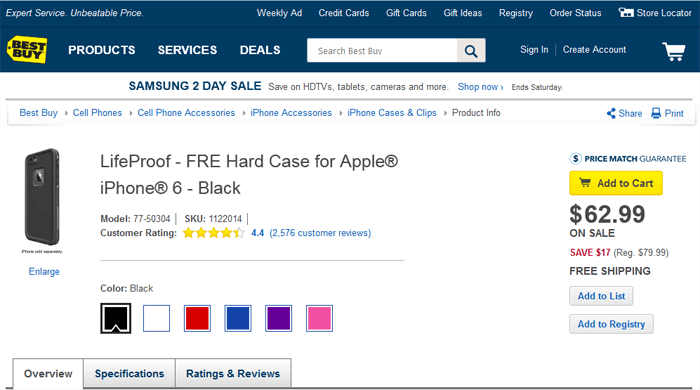
Now let’s look at the title tag that displays in the search results:

Within the code, the title tag displays as such:
Although this title tag is only 68 characters, it is still too long for Google search results henceforth, it is truncated by Google and ended with an ellipse or “….” As an SEO, how would you handle this scenario? Would you leave the title tag the same? Is it optimized for their keyword? Are they stuffing too many keywords into it?
Really, there is no one right answer. If I polled 5 SEO’s I would get 5 different answers, and all of them could theoretically be correct.
Remember SEO stands for search engine optimization, not search engine perfection. Do your best, stick to the best practices and your site will be a shining example of quality.
A Other “title tags”
If you’ve been reading a lot of SEO tutorials in 2015 you might have come across a number of other uses of the word “title tags.” Primarily the main use of this word is the
Last updated April 2026